

What is Search? When a visitor searches your site, WordPress shows the results using your theme's search template. In most themes that is a plain list of titles and excerpts. The Search template in the Master Addons Theme Builder lets you design that page in Elementor instead, so…
When a visitor searches your site, WordPress shows the results using your theme’s search template. In most themes that is a plain list of titles and excerpts. The Search template in the Master Addons Theme Builder lets you design that page in Elementor instead, so the results look like the rest of your site and visitors can search again without leaving the page.
How the Search template works #
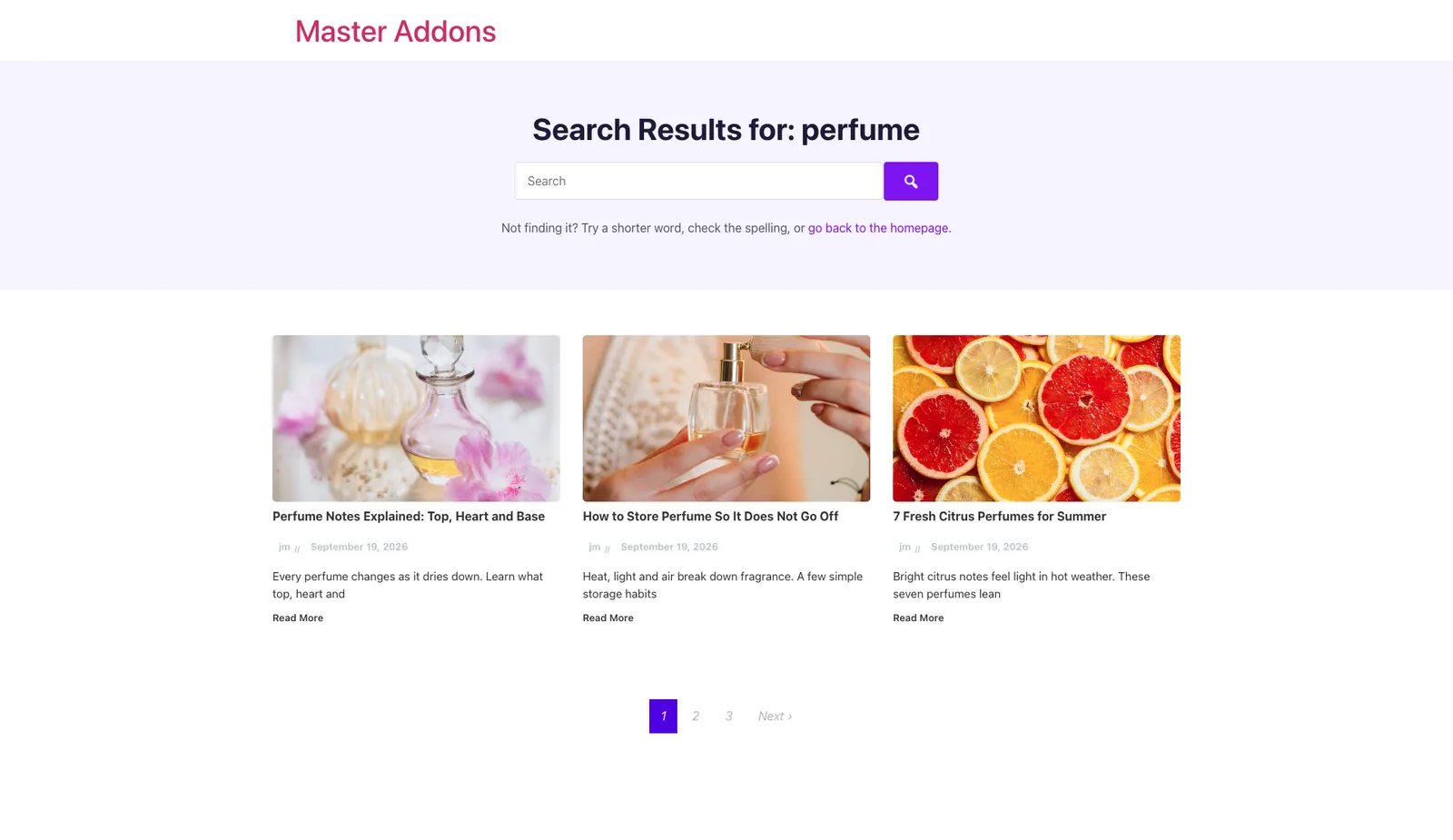
Master Addons loads the Search template on every search results page, meaning any URL with ?s= in it. Your theme’s header and footer stay in place, and the template replaces the content area. Two parts of the design do most of the work:
- The Archive Title dynamic tag, which prints “Search Results for:” followed by what the visitor typed.
- The Blog Posts widget with its Source set to Current Query, which lists the posts and pages that matched the search.
Before you start #
- Install and activate Elementor and Master Addons.
- The Search template type is part of Master Addons Pro. In the free version it appears as “Search (Pro)” in the Template Type list.
- Have some published posts on the site so you can test real results.
Step 1: Create a new template #
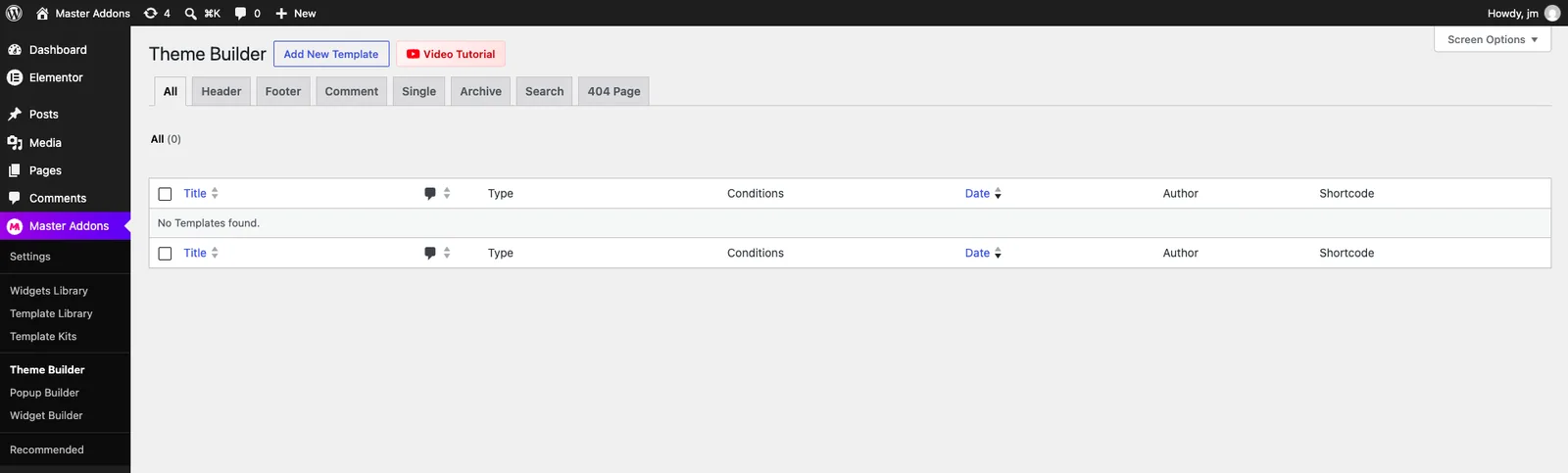
Go to Master Addons > Theme Builder and click Add New Template next to the page title.
Step 2: Choose the Search type #
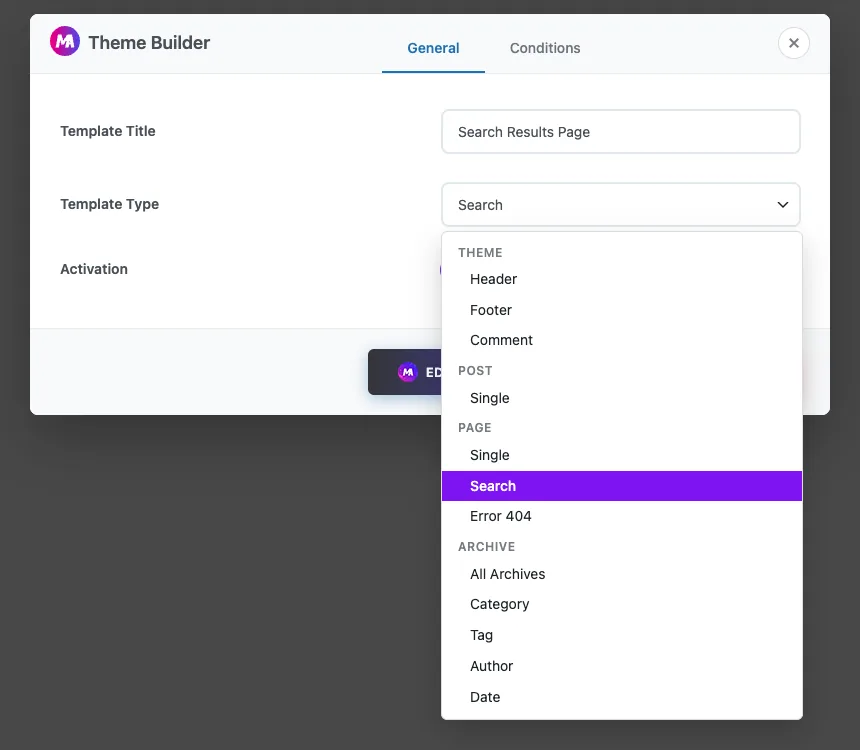
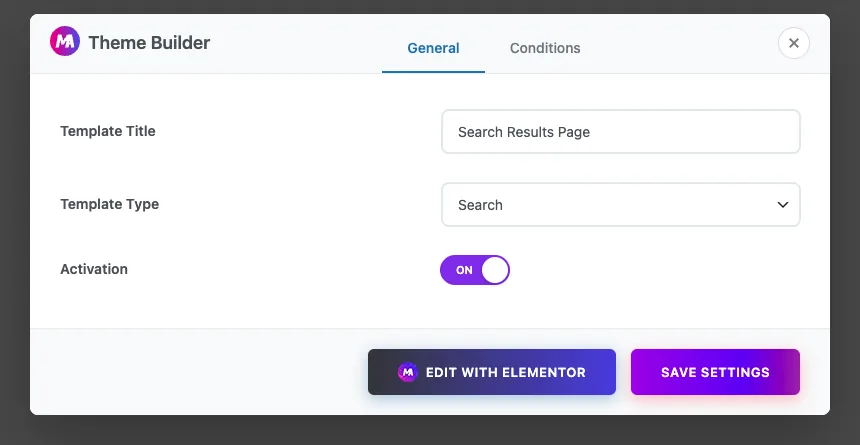
The dialog opens on the General tab:
- Template Title: a name for your own reference, such as “Search Results Page”.
- Template Type: pick Search. It is in the Page group, between Single and Error 404.
- Activation: switch it ON so the template is used on the site.
Step 3: Check the condition #
Open the Conditions tab. For a Search template the condition is set for you as Include > Search, so the template covers every search results page. Leave it as it is.
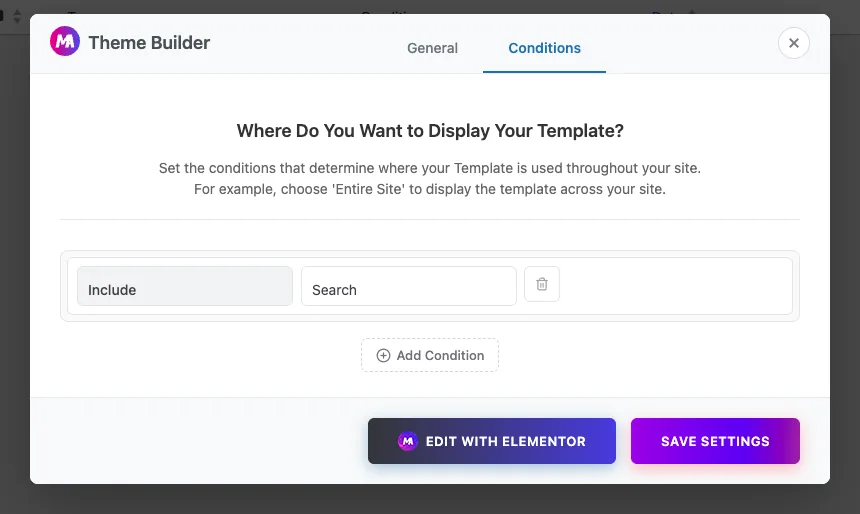
Click Save Settings, or Edit with Elementor to open the template in the editor.
Step 4: Add a heading with the search term #
In Elementor, add a Heading widget at the top of the page. Click the dynamic tags icon in the Title field and choose Archive Title from the Master Addons tags. On the live site it reads “Search Results for: perfume” when someone searches for “perfume”, and adds the page number on page 2 and later.
The tag has an Include Context switch and, under Advanced, Before, After and Fallback fields if you want to add your own text around it.
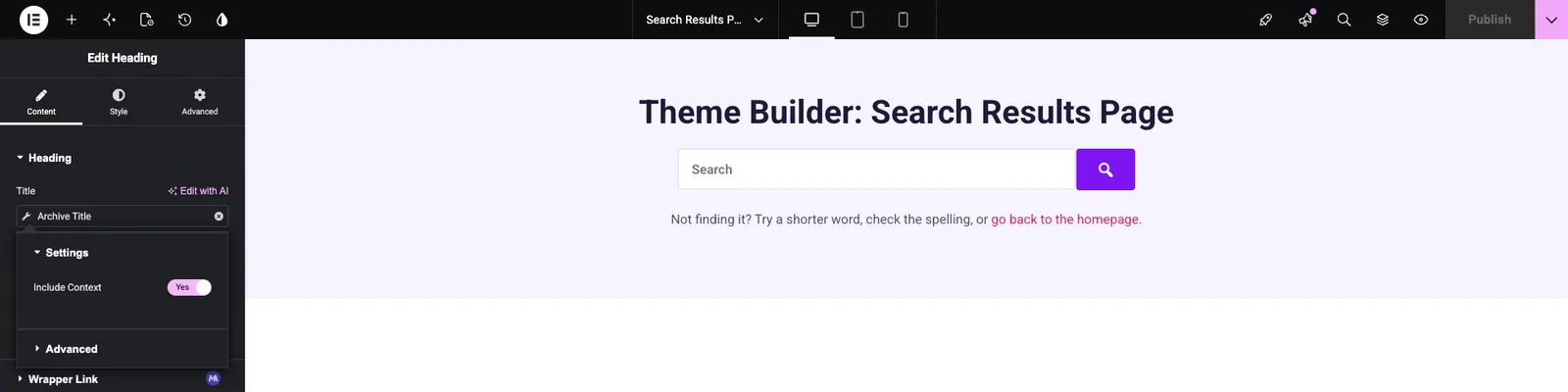
Inside the editor there is no search query yet, so the heading shows the template’s own name, for example “Theme Builder: Search Results Page”. The search term only appears on the front end.
Below the heading, add the Master Addons Search widget in Form mode so visitors can refine their search without scrolling back up. Its form submits to your normal WordPress search, so a new search loads this same template again.
Step 5: List the results with Blog Posts #
Add the Master Addons Blog Posts widget below the header area. Open Display Options and set Source to Current Query. The widget then shows whatever WordPress found for the search, instead of your latest posts.
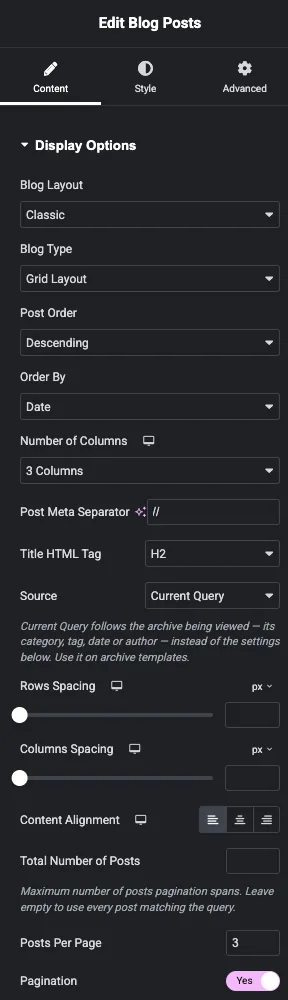
The rest of the widget still controls the look:
- Number of Columns sets the grid, for example 3 columns.
- Posts Per Page sets how many results appear on each page.
- Pagination adds page links when there are more results than fit on one page. You can rename the Next and Previous links.
- Under Thumbnail Settings and Posts Settings you can show or hide the featured image, excerpt, author, date and Read More link.
In the editor the grid previews the template itself as a single card, for the same reason as the heading. Check the real results on the front end.
Click Publish when you’re done.
Step 6: Confirm the template is active #
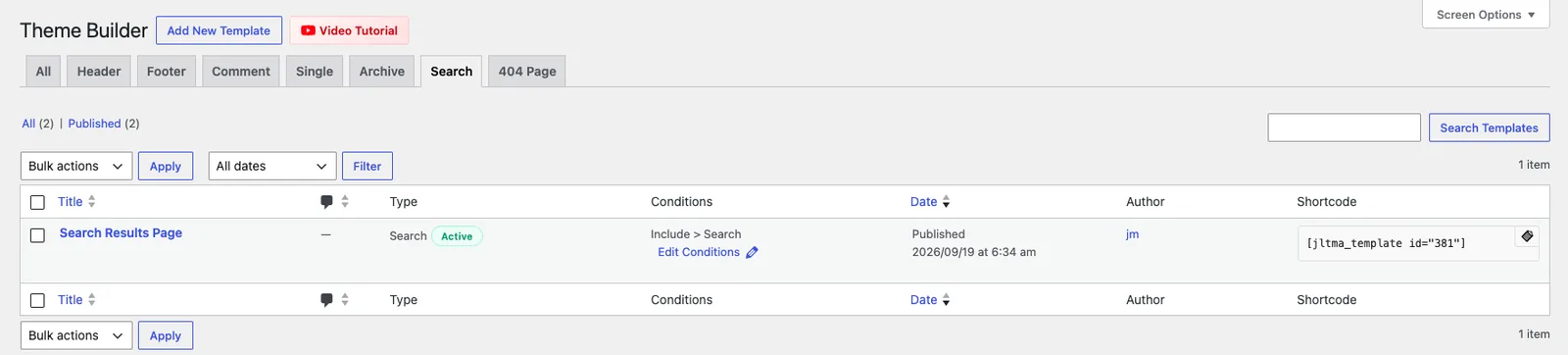
Back in Master Addons > Theme Builder, open the Search tab. The template should show type Search with a green Active badge and the condition Include > Search.
Step 7: Test a search #
Search for a word you know appears in your content, or open yoursite.com/?s=yourword directly. You should see your heading with the search term, the search bar and a grid of matching posts. Pages that match the search appear in the grid too.
Then search for something that doesn’t exist on your site. The Blog Posts grid stays empty when there are no matches, so the heading and search bar are all a visitor sees.

Add a short line under the search bar that makes sense either way, such as “Not finding it? Try a shorter word, check the spelling, or go back to the homepage.” A Text Editor widget works fine for this.
Tips #
- Keep one Search template active. If more than one is on, Master Addons uses the most recently created one.
- Set Posts Per Page to a multiple of your column count (6 or 9 for three columns) so the last row isn’t half empty.
- Posts without a featured image show as text-only cards. If your site has many pages without images, consider turning thumbnails off for a tidier grid.
- Check the page on mobile. Use Elementor’s responsive controls to drop the grid to one or two columns on small screens.
Frequently asked questions #
Is the Search template free? #
No. The Search template type is part of Master Addons Pro. The free version shows it as “Search (Pro)”. Header, Footer and Comment templates are available in the free version.
Why does the editor show the template name instead of the search term? #
The editor has no search query to read, so the Archive Title tag and the Blog Posts grid use the template itself. Open a real search on the front end to see the results.
Do search results include pages? #
Yes. With Source set to Current Query, the grid lists everything WordPress’s search returned, which includes pages as well as posts.
What shows when nothing matches? #
The Blog Posts grid shows nothing. Add a helpful line of text and the search bar near the top so visitors still have somewhere to go.
How do I go back to my theme’s search page? #
Switch the template’s Activation to OFF in the Theme Builder, or move it to the trash.
Wrapping up #
To build a custom search results page, create a Search template under Master Addons > Theme Builder, add a heading with the Archive Title tag and list the results with Blog Posts set to Current Query. Test it with a search that has results and one that doesn’t. For the other parts of your site, see the Archive, 404 and Header template guides, or read more about the Master Addons Theme Builder.


