

Dynamic tags are how a template stops being one page and starts being every page: the heading pulls the post title, the image pulls the featured image, and so on down the page, all automatically. Elementor locks dynamic tags behind Pro. The Dynamic Tags extension in Master Addons for Elementor unlocks a full set of them in the free editor.
Enable the extension, click the dynamic icon on almost any text, link, or image control, and pick what the field should pull from WordPress. This guide walks through the tag groups and builds a small single post template with them.
This page covers the settings. For the full tag list and a guide to showing the last updated date, see the free Elementor dynamic tags extension page.
What the Dynamic Tags extension does #
The extension adds Master Addons tags to Elementor’s dynamic tag picker, the small database icon that sits on supported controls. Instead of typing fixed text, you bind the control to a data source, and WordPress fills in the value per post, per archive, or per site.
The tags come in groups, each marked with the purple MA badge:
- Post: Post Title, Post Content, Post Excerpt, Post Date, Post Time, Post Terms, Post ID, Post URL, Post Custom Field, Featured Image, and Post Image Attachments.
- Media: Featured Image Data, for binding image widgets to the post thumbnail.
- Author: Author Name, Author Info, Author Meta, Author Profile Picture, and Author URL.
- Archive: Archive Title, Archive Description, Archive Meta, and Archive URL for category and tag pages.
- Comments: Comments Number and Comments URL.
- Site and User: Site Title, Site Tagline, Site Logo, Site URL, Page Title, Current Date Time, User Info, Request Parameter, and Shortcode.
- Action and links: Contact URL, Pages URL, and Taxonomies URL.
Before you start #
- WordPress with Elementor installed and active. The free version is enough; that is the point.
- Master Addons for Elementor installed and active. New to the plugin? Follow the installation guide first.
- Dynamic Tags is a free extension, so no Pro license is required.
How to enable the Dynamic Tags extension #
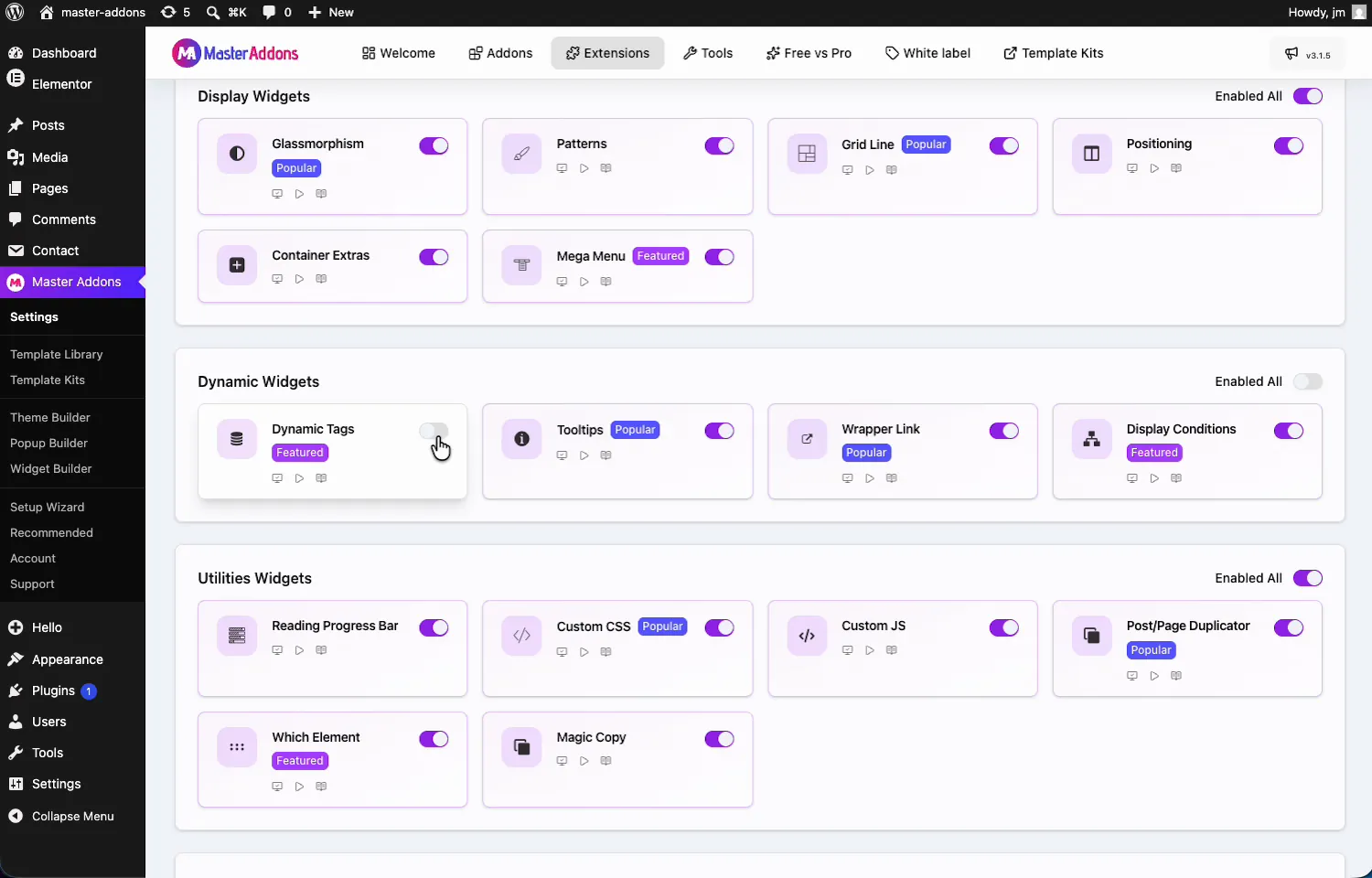
From your WordPress dashboard, go to Master Addons and open the Extensions tab. Dynamic Tags leads the Dynamic Widgets group with a Featured badge, next to Tooltips and Wrapper Link. Click its toggle so it turns purple, then hit Save Changes and wait for the green “Settings saved successfully” notice.
Bind a control to a dynamic tag #
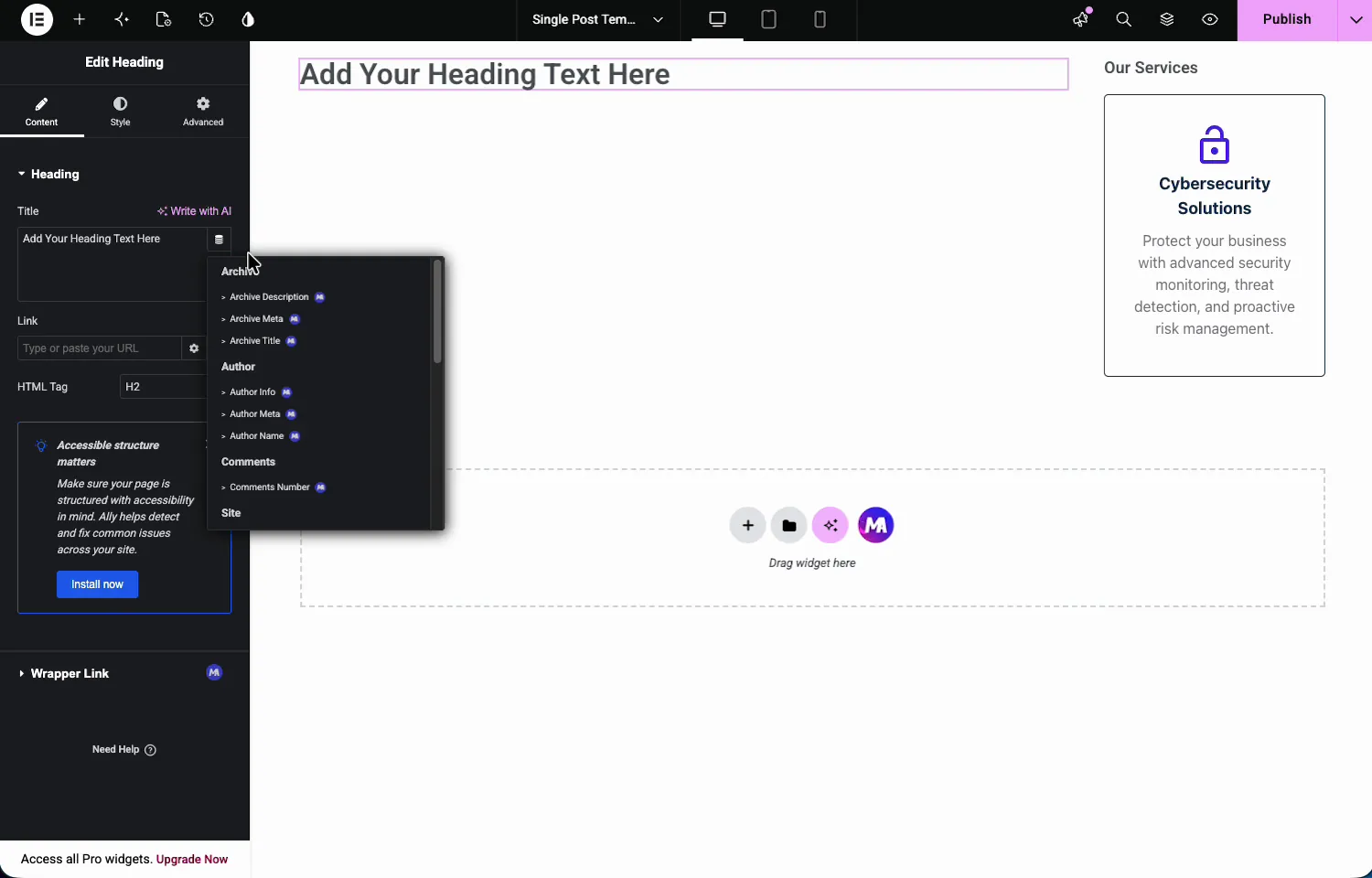
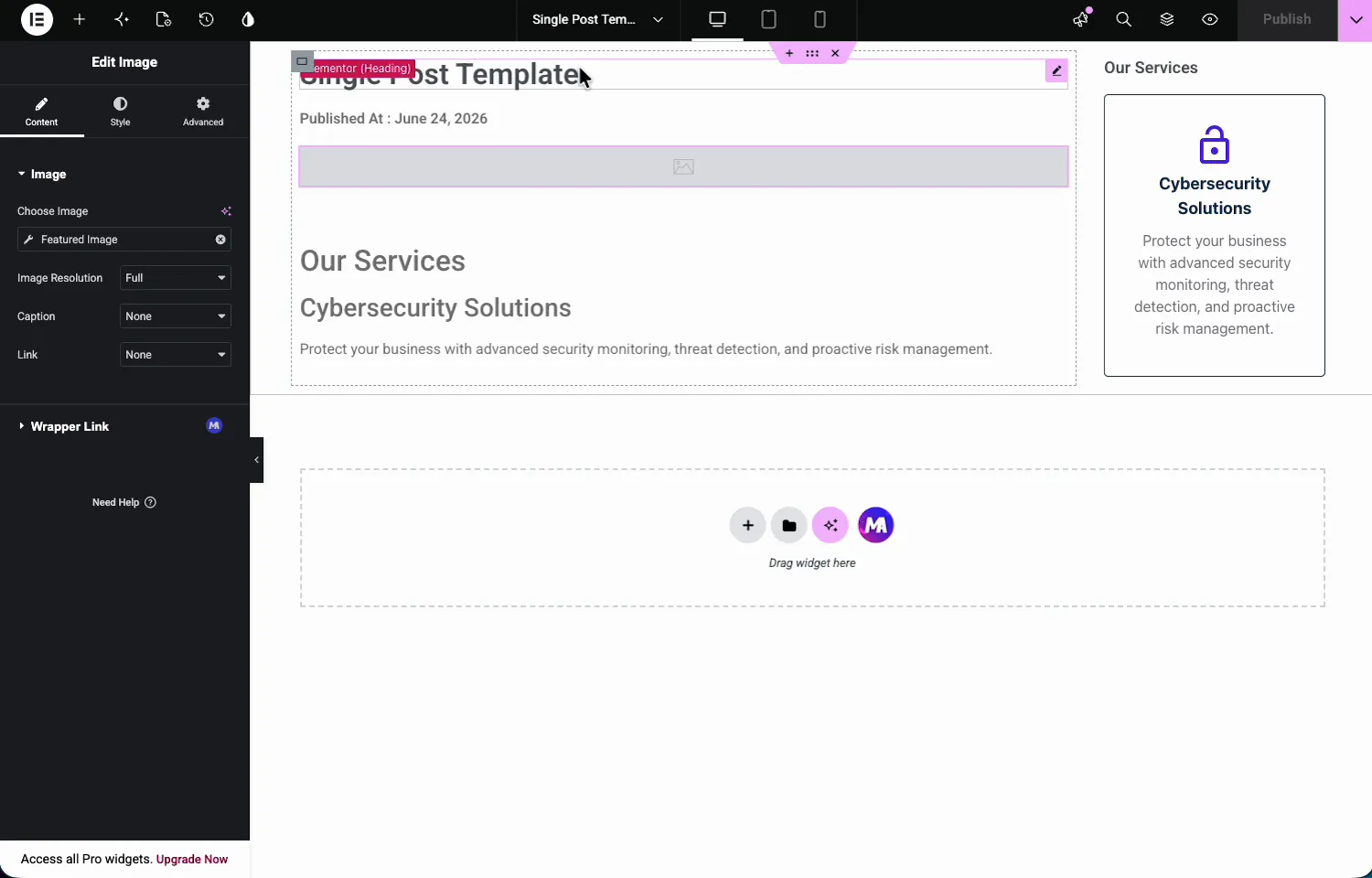
Open a template or page with Elementor and select a widget. In the video the canvas is a single post template with a Heading widget. Click the dynamic tags icon on the Title control (the small database symbol) and the tag list opens, grouped by source: Archive, Author, Comments, Site, and more, each entry carrying the MA badge.
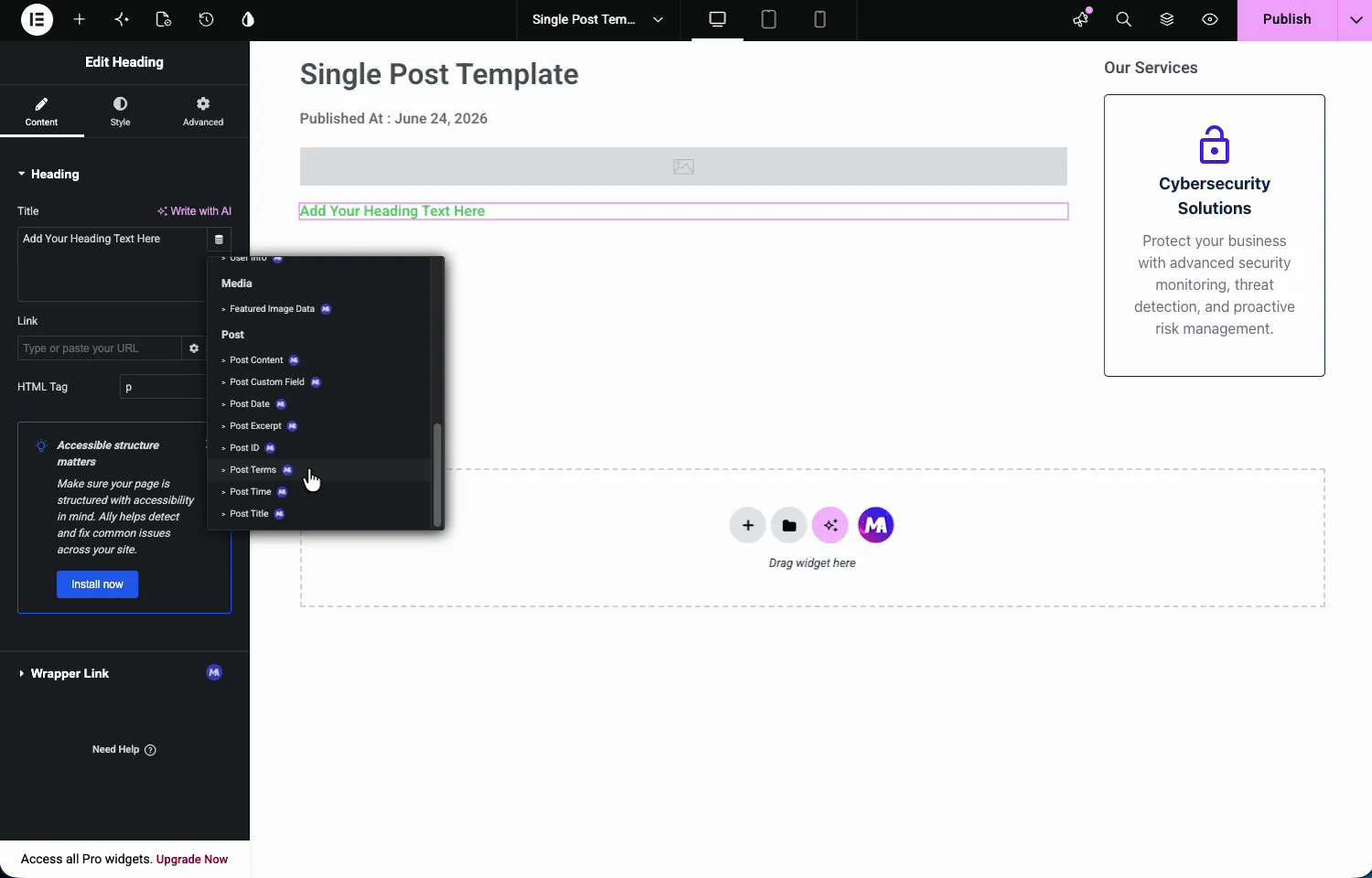
Scroll down for the Post group: Post Content, Post Custom Field, Post Date, Post Excerpt, Post ID, Post Terms, Post Time, and Post Title, plus Featured Image Data under Media.
Build a single post template with the tags #
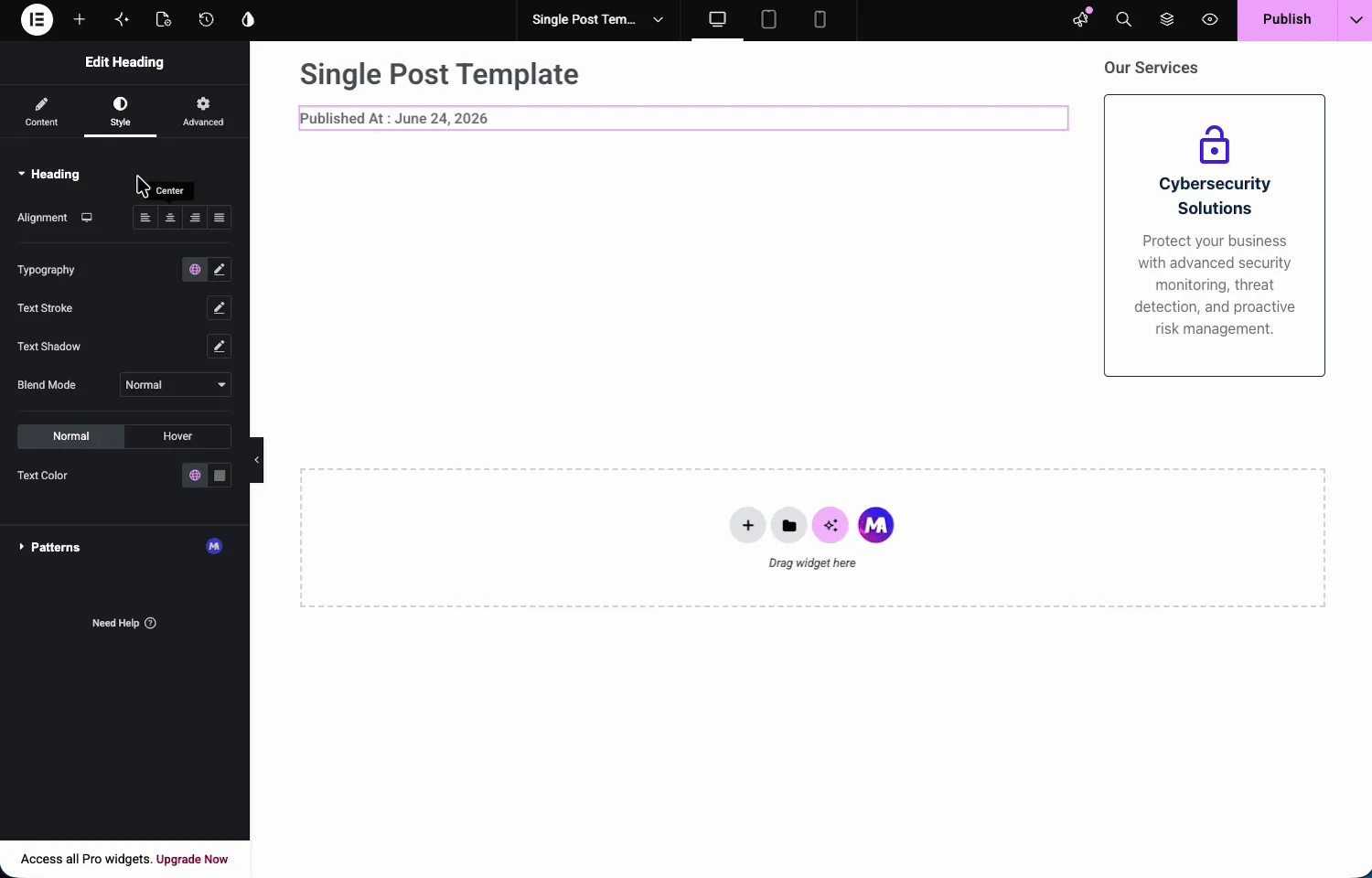
Pick Post Date for the heading, and it renders the real date instead of placeholder text. Most tags accept extra settings: a label like “Published At : ” in front, or a date format. The widget stays a normal Heading, so the Style tab still controls typography and color.
Add an Image widget and set Choose Image to the Featured Image dynamic tag the same way. In the editor it shows a gray placeholder, since the template does not know which post it renders yet. Repeat with Post Title for the main heading and Post Content for the body, and the template is complete.
The result on a real post #
Load an actual post and every tag resolves: the real title, the published time, the featured image, the category from Post Terms, and the full article body from Post Content.
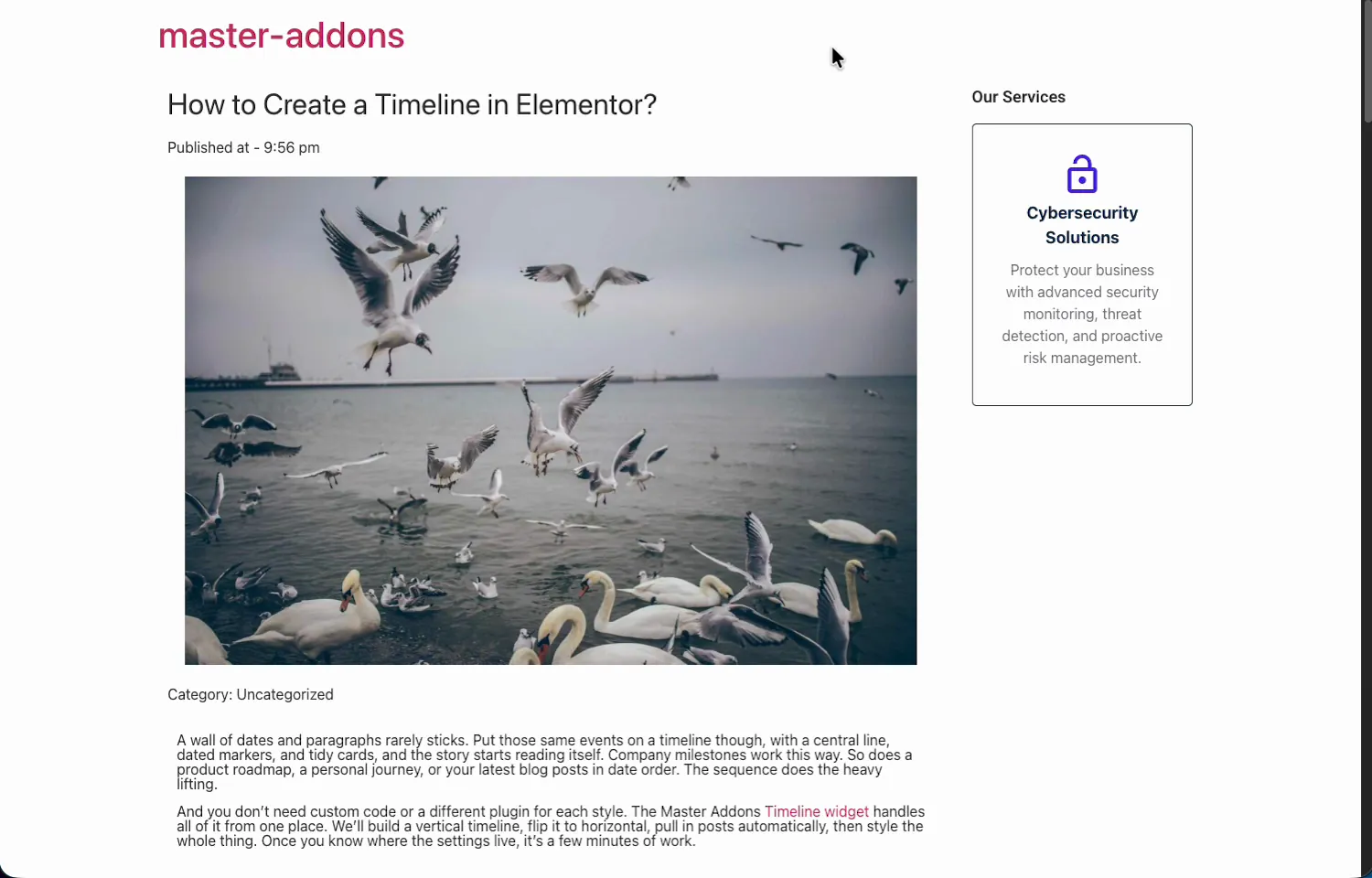
One template, and every post on the site renders through it with its own content. Edit the design once, and all posts update together.
Where dynamic tags pay off #
- Single post templates. Title, date, author, image, and content bound once, reused on every post.
- Archive pages. Archive Title and Description make one template serve every category and tag.
- Author boxes. Author Name, Info, and Meta build a bio block that follows the writer.
- Custom fields. Post Custom Field surfaces ACF or meta values anywhere text goes.
- Combined with Wrapper Link. The Wrapper Link extension accepts these tags too, so a whole card can link to its own post.
Video Tutorial #
Watch the tags in action, from enabling the extension to a finished dynamic post template.
Frequently Asked Questions #
Can I use dynamic tags in Elementor without Pro?
Yes. The Master Addons Dynamic Tags extension adds post, author, archive, media, site, and user tags to the free Elementor editor. Enable it in the Extensions tab and the dynamic icon on supported controls offers the full tag list.
Which dynamic tags does the extension include?
35 tags. Post tags: Post Title, Post Content, Post Excerpt, Post Date, Post Time, Post Terms, Post ID, Post URL, Post Custom Field, Featured Image and Post Image Attachments. Author tags: Author Name, Author Info, Author Meta, Author Profile Picture and Author URL. Archive tags: Archive Title, Archive Description, Archive Meta and Archive URL. There are also Featured Image Data, Comments Number, Comments URL, site tags (Site Title, Site Tagline, Site Logo, Site URL, Page Title, Current Date Time, User Info, Request Parameter, Shortcode) and link tags (Contact URL, Pages URL, Taxonomies URL). Each shows an MA badge in the picker.
Why does my dynamic tag show a placeholder in the editor?
A template does not know which post it will render until it loads on a real one, so image tags show a gray placeholder and text tags may show sample values in the editor. View an actual post on the front end and every tag resolves with real content.
Can dynamic tags show custom field values?
Yes. The Post Custom Field tag outputs any post meta value by key, including fields created with plugins like ACF. Bind a text control to it, enter the field key, and the stored value renders per post.
Is the Dynamic Tags extension free?
Yes. Dynamic Tags ships with the free version of Master Addons for Elementor, in the Dynamic Widgets group of the Extensions tab. The pricing page covers what the Pro plans add.
Wrapping up #
The Dynamic Tags extension gives free Elementor the feature that makes templates worth building: content that fills itself in. Enable it once, bind headings, images, and links to their sources, and one design serves the whole site. It pairs naturally with the Wrapper Link extension for clickable dynamic cards, and the rest of the Master Addons widgets and extensions are one page away.


